Saturday, June 6, 2015

Fowler Museum: Making Strange: Gagawaka + Postmortem

When I first entered the Fowler Museum, I did not exactly know what to expect, but I definitely did not expect the exhibition to be so similar to haute couture. As an anthropology museum, I had the expectation that it would have more cultural and historical influence that would almost turn viewers away from it. I was extremely pleased while walking through the exhibit taking pictures of all of the pieces. Each piece was so delicate and intricate that it reminded me of runway fashion. Designers send their models down runways in fashion that is beautiful, but certainly not ready-to-wear. Vivan Sundaram’s work reminded me of Alexander McQueen’s Savage Beauty with the blend of organic materials with couture. Even the set up was similar to the display that was at the Metropolitan Museum of Art with the darkness of the exhibit and composition of the headless and/or blank mannequins.
This generation is constantly yearning for something new and updated. Each of us wants the new, best thing and the idea of recycling objects is almost foreign to us. Even the idea of having something vintage is just a style and is mass-produced for the consumer. The process of digging through recycled items to create a new piece just adds more character to the art that is usually not appreciated. Each garment is created by Vivan Sundaram to tell us something, but each recycled material has its own significance and story.  
As a costume designer, I was not only in love with the aesthetic appeal of the garments themselves, but also the practicality of actually wearing the pieces. Creating art from unconventional items to display on a dress form is one thing, but constructing it in a way that is wearable and realistic is another.
One of my favorite pieces was the 2-piece suit of armor made from the monochromatic blister packs.  From afar the garment just look like metal armor, but as you get close you notice the true recycled material of the piece. Attaching the packs together could have created the art, however, there is a level of texture from pushing out the pills. Not only is there an assortment of pill sizes, but also the arm sleeves and pants differ in composition.  From some aspects the 2-piece can come off as trash and just things stuck together, but there is true art in the composition of each detail. The zipper emphasizes the ability for the haute couture to be worn in every day life, although it may be uncommon. The message I personally received from this garment was a piece that emphasized the dependency on medicine that our generation has. People are constantly taking medication for headaches and minor pains that generations have endured without medicinal products. Also, over time I have seen a constant reliance on misuse of prescription pills and med-tech. The armor signifies the protection that people feel when they use this medication even though it may not always be the best solution or safe. Constantly having a large amount of medication at hand or in their back pocket to use whenever something small or large comes their way is abusing the source. This piece represented that aspect of today’s culture in my eyes and I believe that it makes a powerful statement on the subject whether it is support or objection against the issue. I would recommend this exhibit because it shows the use of medical resources and tools as physical garments.


Google Project: Los Atlantis

Los Atlantis is a multi-media interactive theater experience funded by Google put on by UCLA's Theater, Film and Television school. It discusses the dependency our society has on technology. We are constantly using our phones and our reliance on them for directions, communication, etc. The experimental performance contrasts the memory of technology with the memory of humans. "The Archive" is consistently referred similar to the cloud and the four main characters go on a journey of reminiscing and reflecting on their own memories and the emotions tied to it.
The four characters would meet up from time to time and then split off on their own. The audience is to choose one path to follow and walk around Macgowan into different rooms to experience different things. Each room had a different set design and used different lighting to change the mood.
Although it was a fairly amateur performance and the tech was a little off, I think it describes the society's reliance on technology immensely.
The audience members are each invited to the performance website in order to register. After registering, each audience member is asked to attach photos, videos, and/or hashtags. Each are compiled and played throughout the performance. Throughout the scenes, each phone registered gets notifications regarding the actors they are following. The performance as a whole emphasizes how technology facilitates and almost controls our lives, almost like a robot, to the point where we solely rely on it. I think it is important for audience members to see this in work.
Ironically, however, the performance is streamed online for people to watch even if they cannot make it. It takes away from the experience as a whole, but what can we do, we live in a world where technology facilitates everything merging the two cultures of art and technology.


Sunday, May 31, 2015

Space + Art


As a Theater major on the costume design track, I have a different perspective while watching science-fiction films and television shows. E.T., Star Trek, Star Wars, etc. have created a new vision on the merging of space and art. I decided to steer more towards installation art and fine arts because I am a little bit more familiar with the imagination aspect of space in pop culture.

Orbit PavilionOrbit Pavilion

After finding this video, I decided to research for something that really resonated with this class, the idea of merging together education with arts and sciences. I found an article on the NASA art exhibit and was extremely impressed by the idea and execution. Although many of us may have dreamed as a child of becoming an astronaut, very few of us will actually be able to experience this. This installation, however, allows those who enter to experience the Earth-orbiting satellite in New York City as a part of the World Science Festival.


The mix of architecture and science is evident, but also the use of sound design is clearly impactful here. The art is a shell-shaped down made of aluminum and called the NASA Orbit Pavilion. It is designed to be acoustically ideal for groups of kids and adults standing int he middle of it for a five-minute sound show of a journey with 20 NASA satellites studying the Earth today. From the vibration of the dome to the feeling in your bones, the audience members can truly experience the feeling of take-off and listen to the musical experience of satellite sound off.

As a person who has a lack of interest in science, I think that NASA creating educational exhibits for all people to enjoy and experience by merginig art and space is similar to the structure of our class and Professor Vesna's lectures.

"The Earth is a planet, and only NASA has the unique ability to study planets The Earth needs to be studied as a planet because it's a very complex system. Other agencies focus on doing research here on the planet. NASA focuses on using the techniques, the tools and pushing the technology for studying out planet from space" (Ellen Stofan, NASA's chief scientist)

Works Cited
Cofield, Calla. "Sounds of Science: NASA Satellites Sing at World Science Festival | Space.com." N.p., n.d. Web. 31 May 2015. <http://www.space.com/29522-nasa-satellites-sing-world-science-festival.html>.
Dunbar, Brian. NASA. NASA, 11 Mar. 2013. Web. 31 May 2015. <http://www.nasa.gov/connect/artspace/>.
Dunbar, Brian. NASA. NASA, 24 May 2011. Web. 31 May 2015. <http://www.nasa.gov/home/hqnews/2011/may/HQ_11-165_Art_Anniversary.html>.
"NASA Orbit Pavilion - World Science Festival." World Science Festival. N.p., n.d. Web. 31 May 2015. <http://www.worldsciencefestival.com/programs/nasa-orbit-pavilion-5/>.

"Teach Arts and Sciences Together." Mae Jemison:. N.p., n.d. Web. 31 May 2015. <http://www.ted.com/talks/mae_jemison_on_teaching_arts_and_sciences_together?language=en>.

Sunday, May 24, 2015

Nanotech + Art


Nano in Greek means "dwarf." But that word does not accurately describe how small a nanometer is. A nanometer is one billionth of a meter and to put that in perspective, the average thickness of a human hair is 500,000 nanometers. 
Our first instinct when trying to look at something so small would be to use a microscope. But even a microscope that can magnify ten thousand times, will come up fuzzy or blank. In 1981, the Scanning Tunneling Microscope was invented, allowing atoms so small to be seen. 
In popular culture, the idea of shrinking down to the size of a dust bunny and seeing a new world from the perspective of something so miniscule is fascinating and frequently displayed in the plots of movie and tv. Without the use of technology or science, this depiction would be inaccurate. The art that results from these advanced microscopes are mind boggling with the amount of clarity and details.
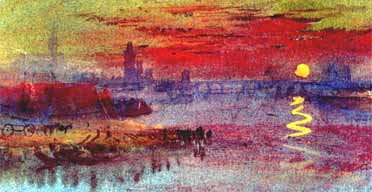
For example, above is a polycrystalline alloy consisting of three elements—nickel, magnesium, and gallium. This alloy is a magnetic shape memory material. The image was taken with a polarized optical microscope, which lends the picture its vivid colors. Some compare it to a Turner sunset, which simply goes to show that, our imagination takes over when we see things from different perspectives. 
As I researched more and more about nanotech merged with art, I looked into our very own Professor Vesna and Dr. Gumzewski's installation. The exhibit displayed how ar, science, and technology are constantly inflluencing each other. Through the installation, participants were able to experience how it felt to manipulate atoms one by one.
"Nanoscience will eventually revolutionize and impact upon every single aspect of our lives, including the arts," said Gimzewski. "It brings all the sciences together at the level of the atom. It is completely new in the way we fabricate and make things." (http://news.nationalgeographic.com/news/2003/12/1223_031223_nanotechnology_2.html)
 Works Cited
"Can Art Make Nanotechnology Easier to Understand?" National Geographic. National Geographic Society, n.d. Web. 24 May 2015. <http://news.nationalgeographic.com/news/2003/12/1223_031223_nanotechnology_2.html>.
Lilley, Maiken. "The Art of Nanotech." PBS. PBS, 18 Nov. 2010. Web. 24 May 2015. <http://www.pbs.org/wgbh/nova/tech/art-nanotech.html>.
"NANO | about." NANO | about. N.p., n.d. Web. 24 May 2015. <http://nano.arts.ucla.edu/mandala/about.php>.
"NanoArt: Nanotechnology and Art." : Media and Communications Book Chapter. N.p., n.d. Web. 24 May 2015. <http://www.igi-global.com/chapter/nanoart-nanotechnology-art/65026>.
"When Nanotechnology Meets Art." ScienceAndReligioncom. N.p., 20 Apr. 2011. Web. 24 May 2015. <https://iaincarstairs.wordpress.com/2011/04/20/when-nanotechnology-meets-art/>.

Sunday, May 17, 2015

Neuroscience + Art

As the most complicated object in the Universe, the brain is a jumbled knot of cells that are connected for a person to perceive, think, feel, etc. and that is extremely fascinating to me. The relationship between neuroscience and art is often ignored and seen as irrelevant. However, the brain is the sole reason why we are able to view art and see the aesthetic beauty of each piece. The idea that artists were only attracted to science was introduced by foundational figure, Sanitago Ramon y Cajal, which produced numerous drawings of the image of a neuron in the brain.
Brainbow Hippocampus rainbow colors large
This is still seen today in the works of many artists, such as Greg A Dunn with his microetchings that are handmade lithographs that manipulate light on a microscopic scale to control the reflectivity of metallic surface in precise ways. As a visual artist with a Ph.D. in neuroscience, Dunn truly embraces the beauty packed in the architecture of each branching pattern of a plant or neuron. He was inspired by Santiago Ramon y Cajal and pan-Asian artwork.
As a person of Asian descent, I was especially attracted to Dunn's work. The different aspects of the brain come off elegant and spontaneous, which is similar to the Asian style of branching trees, cracks in pavement, and streaming rivers. Even as I think about the brain now and how it traditionally perceived, I can see the comparisons to a river or cracking desert ground.

Works Cited
Drake, John M. "Ecology, Cognition and Landscape: Linking Natural and Social Systems . Landscape Series, Volume 11. By Almo Farina . Dordrecht (The Netherlands) and New York: Springer. $129.00. Xi + 169 P.; Ill.; Index. ISBN: 978-90-481-3137-2 (hc); 978-90-481-3138-9 (eb). 2010." The Quarterly Review of Biology 87.1 (2012): 55-56. Web.
"Humanities & Neuroscience Project." Italian Academy for Advanced Studies. N.p., 10 June 2014. Web. 19 May 2015. <http://italianacademy.columbia.edu/humanities-neuroscience-project>.
"An Introduction To Microetching." YouTube. YouTube, n.d. Web. 19 May 2015. <https://www.youtube.com/watch?v=GLt5A29N0zg>.
MailOnline, Victoria Woollaston for. "A Beautiful Mind: Japanese-style Art Inspired by Neuroscience Reveals Grey Matter in Much More Colourful Glory." Mail Online. Associated Newspapers, 15 Dec. 2014. Web. 19 May 2015. <http://www.dailymail.co.uk/sciencetech/article-2874373/A-beautiful-mind-Japanese-style-art-inspired-neuroscience-reveals-grey-matter-colourful-glory.html>.

"The Neuroscience of Creativity." Comic Art, Creativity and the Law (2014): 7-11. Web.